
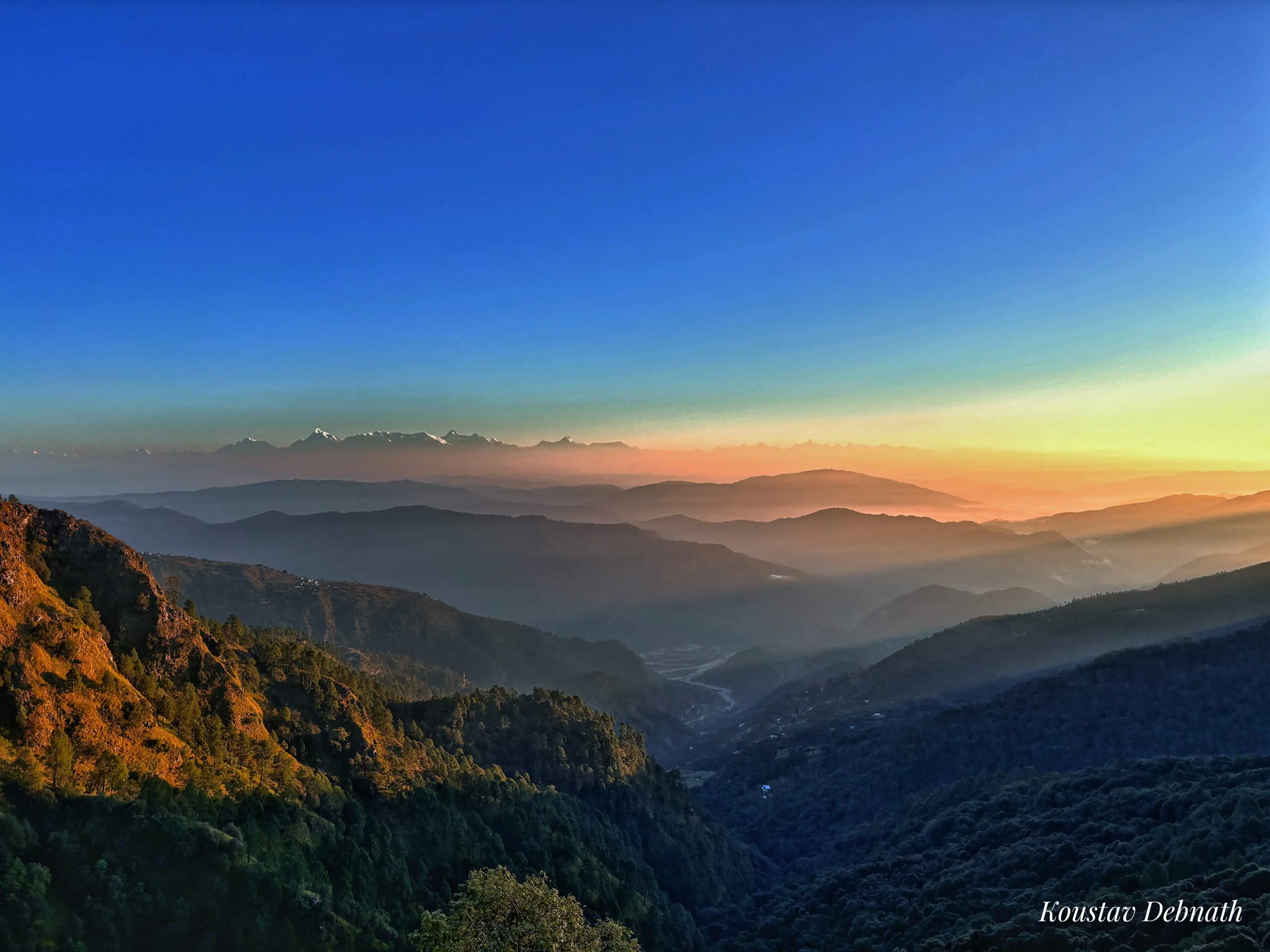

Tucked away in the Kumaon hills of Uttarakhand, just a short drive from the bustling hill station of Nainital, lies Pangot — a tiny, tranquil village that feels like a well-kept secret of the Himalayas.
If you’re craving a break from crowded tourist spots and noisy city life, Pangot offers the perfect escape. With its misty forests, chirping birds, and untouched beauty, this place is a paradise for nature lovers, bird enthusiast, and anyone seeking a little peace and quiet.
How to reach Pangot:
Pangot by Road: Pangot is best reached via road. Delhi to Pangot about 340 KMS east-words and takes approximately 7.5 hours. If you are travelling by car from Delhi, you should proceed on NH 24 towards Rampur through Hapur; then switch gears, taking NH 87 towards Nainital via Haldwani. From Nainital, Pangot is approximately 13 km away. The drive passes through Cheena Peak Range and covers the Snow View Point and Kilbury.
You can also go by bus, as overnight buses are available from New Delhi to Nainital. and Kathgodam from ISBT Anand Vihar, Delhi. Of course, one can also catch the local bus from Pantnagar Airport to reach Pangot for approximately INR 600 – 800. You can try Flixbus, it is comfortable and cheap.https://www.flixbus.in/
Pangot by Train: The nearest railway station is Kathgodam and Haldwani It takes around 3-3.5 hrs to reach Pangot. Taxis are easily available from both railway stations for INR 800 -1000.
Pangot by Air: The nearest airport is Pantnagar. From there, one can hire local cabs or even take local buses to cover 50 KMs to reach Pangot, taking around 3 – 3.5 hours.
Our adventure kicked off on a crisp, clear November morning – the kind that just screams “mountains”! We boarded the Shatabdi Express from New Delhi railway station right at 6:20 AM. It was a comfortable ride, and just as the clock hit noon, we pulled into Kathgodam.
Stepping out, the fresh air hit us, and finding our next ride was surprisingly easy. Right outside the station, a taxi booth was waiting. We quickly found a sharing taxi, paid a reasonable INR 500 each, and off we went, heading towards the quiet beauty of Pangot
Things to do at pangot:
1. Birdwatching Paradise
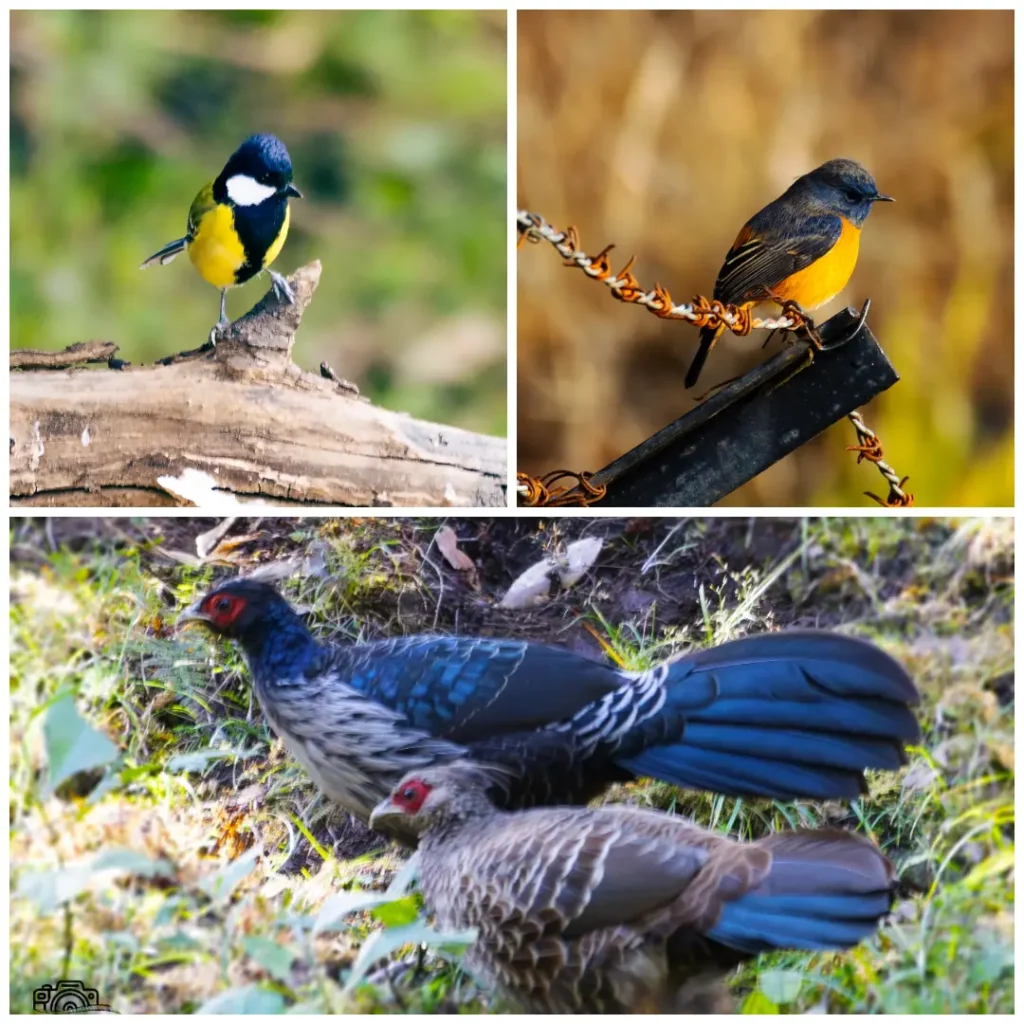
Pangot is a haven for birdwatchers. With over 250 species of birds, including the elusive Cheer Pheasant, Himalayan Griffon, and the colourful Khalij Pheasant, the area offers a spectacular birding experience. Don’t forget your binoculars and camera!
2. Scenic Nature Trails
Take a walk through the dense oak and pine forests that surround the village. These trails offer not just tranquility, but also stunning views of the surrounding mountains and occasional wildlife sightings.
3. Trek to Naina peak:
Another exciting activity to do in Pangot is the Naina peak trek which has an elevation of 2615 meters. The trek is an easy to moderate six km’s trek which can be completed if you have a minimum level of physical fitness.It offers stunning panoramic views of the Himalayas and the glittering Nainital Lake lying below. The trek is known for its diverse landscapes, including dense forests.
4. Our Quest for Himalayan Birds (and a Sunrise Surprise!)
Our mission in Pangot was clear: Birding! This charming little village, nestled amidst forests teeming with fruit and flower trees, is a haven for Himalayan avian life. If you’re a fellow bird enthusiast, mark your calendars for March-April and October-November – these are prime times for spotting feathered beauties. We highly recommend hiring a local guide; they know all the secret hides and specific spots for those elusive species.
Chasing the Dawn for Our Feathered Friends
The very next day, our alarms sang at 5 AM. Cameras packed, gear ready, our guide was already waiting with his car. We drove past Pangot village, heading uphill towards Kilbury National Park. The forest quickly thickened around us, a silent expanse of towering oak and pine. It was still dark, the sun a distant promise, but our goal was to reach our birding spot just as dawn broke. The roads were delightfully winding, a thrilling prelude to the views we knew awaited us.
As we ascended, the first hints of light began to chase away the darkness. Then, suddenly, a brilliant golden glow caught our eyes in the distance. We pulled over, stepped out into a clearing, and were instantly spellbound.
A Divine Spectacle: Nanda Devi’s Golden Kiss
The very first rays of the sun had painted Mt. Nanda Devi, Mt. Trishul, and other majestic Himalayan ranges in an ethereal orange-gold. It was a sight so profoundly beautiful, so utterly grand, it felt like witnessing the divine. For a moment, we completely forgot our cameras, our mission, even our very purpose. We simply stood, awestruck, absorbing every breathtaking second.

Slowly, the forest began to stir, the awakening calls of birds gently pulling us back to reality. Our quest resumed.
The Hunt for the Kalij Pheasant
At a certain point, our guide stopped the car. This was it! We stepped out, and our dedicated hunt for the magnificent Kalij Pheasant began. We walked and walked, seemingly for miles, pushing through mountain shrubs and bushes, with the grandeur of Nanda Devi peeking between the oaks and pines.
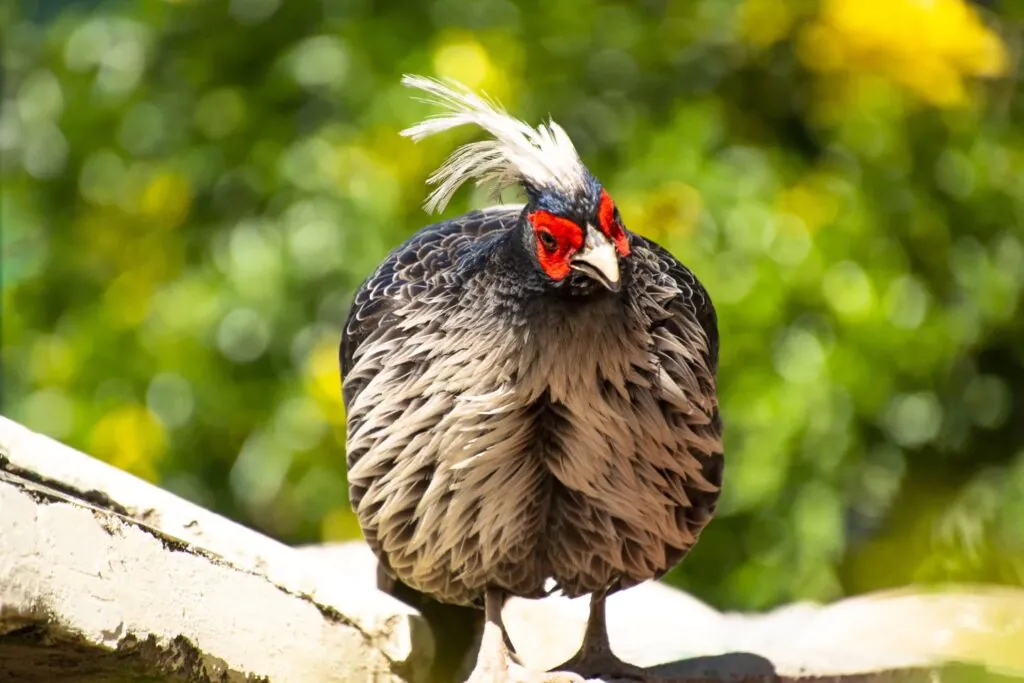
Finally, after our persistent search, we found him! The majestic Kalij Pheasant, elegantly strolling amidst the verdant undergrowth. It was the perfect culmination to a morning already filled with unforgettable moments.
4. Local Cuisine & Culture:
Beyond the birds and breathtaking views, Pangot offers a true taste of the Kumaon region. Here, you can savor traditional Kumaoni dishes, prepared with the freshest local ingredients.
But it’s not just the food that nourishes the soul. Interacting with the warm and welcoming locals offers a genuine glimpse into the region’s rich culture and beautifully simple way of life. Don’t leave without trying the unique Kumaoni Raita, famously made with Bhang (Hemp) seeds, and some hearty Local Rajma.
5. Stargazing at Pangot:
Pangot holds another secret, especially for us city dwellers: its nights are nothing short of magical! Thanks to its remote location and incredibly low light pollution, Pangot offers a perfect opportunity to enjoy a clear night sky absolutely brimming with stars. It’s a truly mesmerizing, soul-soothing experience.
But if you visit between October and December/January, you might be in for an even rarer treat: the magical Winterline! This isn’t just any sunset glow; it’s a unique and captivating atmospheric phenomenon that paints a distinct, often vibrant, horizontal line in the sky at dusk (and sometimes dawn) during the winter months. Often described as a “false horizon,” it’s a truly rare sight.
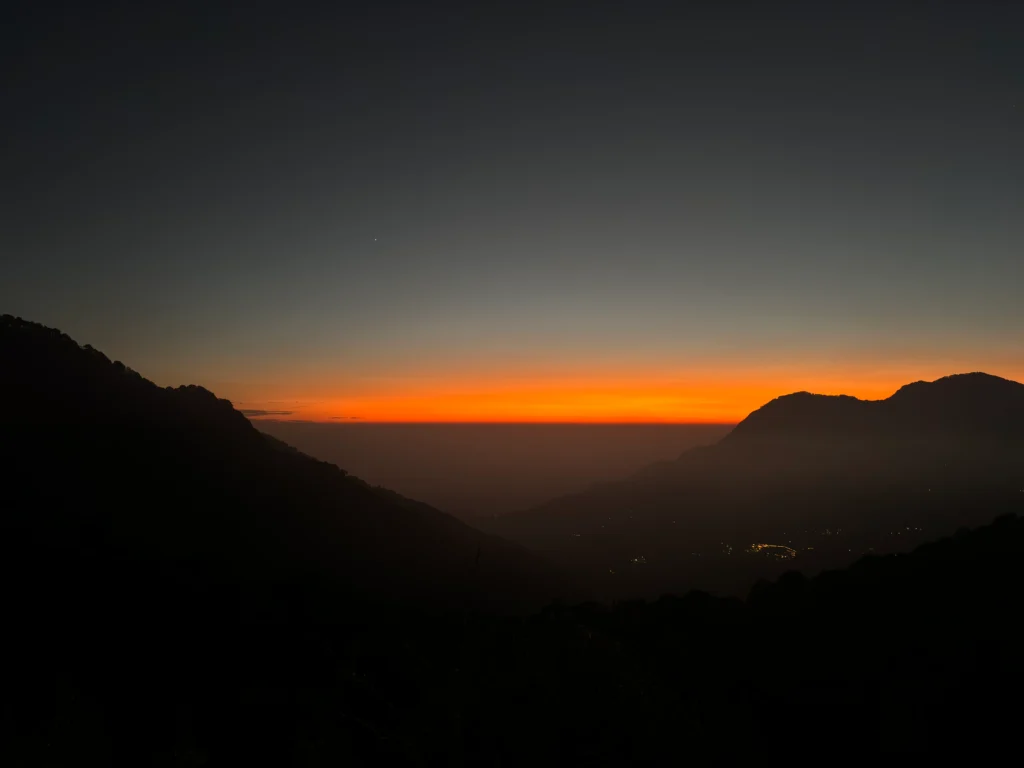
We felt incredibly lucky to witness this phenomenon firsthand. Seeing that unique band of colors stretch across the sky was an unforgettable moment, making our Pangot trip even more special!
6. Staying options at Pangot:
In Pangot, embracing nature goes hand-in-hand with your accommodation! Many of the options here are wonderful eco-lodges and sustainable homestays, perfect for enjoying the Himalayas without a heavy footprint.
We found our serene retreat at Kafal House (https://kafalhouse.com/), a beautiful property nestled amidst lush gardens. A huge bonus for bird enthusiasts: there’s a dedicated birding hide right on-site! Early mornings were a delight, spotting vibrant Himalayan birds like Barbets, Bulbuls, and Yellow-billed Blue Magpies directly from the property.
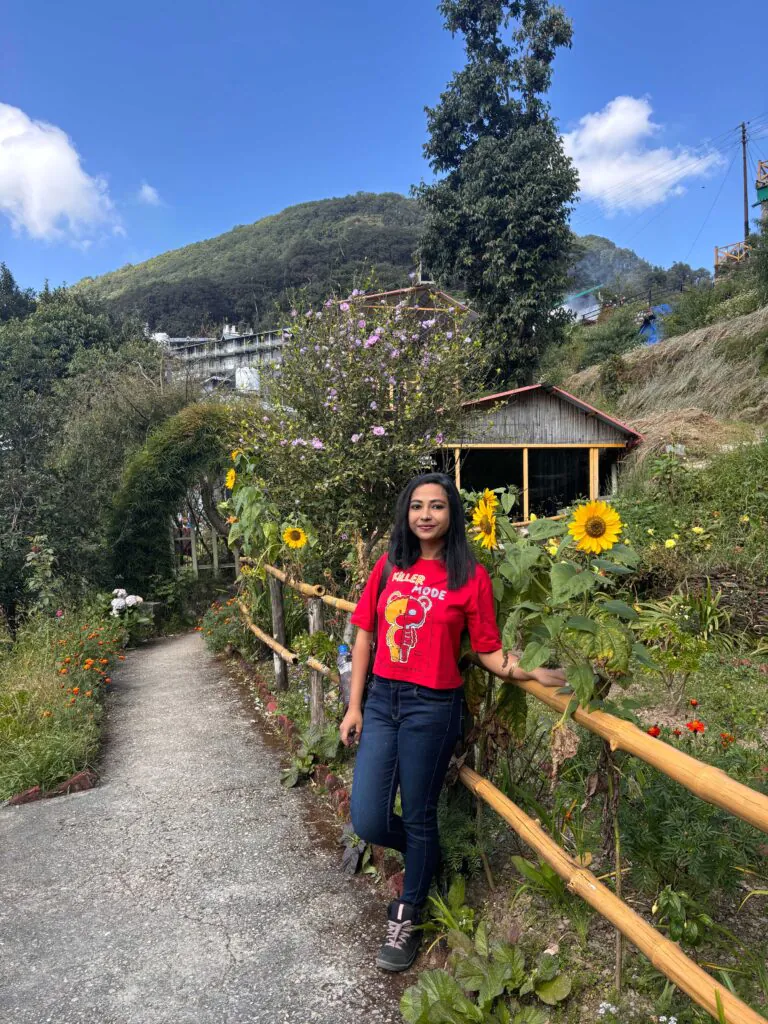
Just next door, the slightly more luxurious Jungle Lore Birding Lodge (https://www.junglelorebirdinglodge.com/) also offers a fantastic birding hide. Both options provide responsible and relaxing stays, making your Pangot trip truly special for nature lovers and bird watchers.
7. Best season to visit Pangot:
Pangot is truly a year-round destination, welcoming visitors anytime barring the monsoon months of July to September.
However, if birding is your primary passion, timing is key! For the absolute best chance to spot its incredible avian diversity, I highly recommend planning your visit during March-April (which is truly prime time!) or October-November. These months offer optimal conditions for a rewarding birdwatching experience.
8. Birding Guides at Pangot:
To ensure a seamless birding experience, here’s a crucial tip: book your birding guide in advance! Both Kafal House and Jungle Lore Birding Lodge are fantastic resources and can easily arrange experienced guides for you. However, demand for these expert naturalists, especially during peak birding seasons, often outstrips supply. A little foresight in booking will save you any last-minute stress!
Pro Tip: Beyond just arranging guides, Jungle Lore Birding Lodge is well-known for conducting numerous comprehensive birding tours in the Pangot area. They’re a great option if you prefer an organized tour with expert leadership.
Birding Guide Contacts:
Jeevan: + 91 63986 37983 (Recommended)
Praveen Pawat: +91 70601 73118
Manish: +91 93897 41873
9. Questions? Ready to Plan? Let’s Connect!
Got more questions about your dream Spiti or Pangot adventure? Need a little personalized assistance? Don’t hesitate!
Drop a comment below – I love hearing from you! Or, for a quicker chat and direct support, reach out to us via WhatsApp.
1 thought on “Birdsong & Pines: A Weekend in Pangot”
Its an outstanding piece of work.
keep it continiue…..